

The Gift:
Noticing & Leveraging Strengths

What if I handed you a seating chart of your students or a staff roster and asked you to name three strengths for each person? Could you do it?
Do you know what lights them up? What reveals their unique genius? The things they do with ease, joy, or natural rhythm?
If not, you’re not alone. Most schools don’t track this kind of data. Not because it doesn’t matter, but because we’ve rarely been taught to treat strengths as essential.
But what if we did? What if knowing each student’s superpowers was the starting point, not the extra? What if we stopped treating strengths like fluff and started using them to drive everything we do?
And if you do know their strengths, students or staff, are you creating space for them to fully step into that genius? Do you know how to use what they do well to strengthen what still needs to grow? Recognizing gifts is one thing. Knowing how to move with them is leadership.
Because if we made that shift, if we focused on what is strong instead of what is missing, school would feel different. Not someday, but right now.
If that thought stirs something in you, this post is for you.
Introduction: A System Blind to Brilliance


Here’s the truth. Every person has a gift, a spark, that’s uniquely theirs, a space in the world only they can fill. Sir Ken Robinson called it The Element—where talent meets passion, and people don’t just function... they flourish.
When we focus on what’s brilliant in our students, we’re not just helping them succeed in school. We’re helping them find the thing that makes them come alive. The thing that says, "You matter. You belong. You have something only you can do."
And let’s be real, many of us have lived this. Remember when you were a kid? Confident. Creative. Certain that you had something special. Then came the spelling tests. The red marks. The “could do better if she just tried harder.” That slow, quiet drift from “I’m amazing” to “I’m not enough.”
The system wasn’t trying to break you. It was trying to help. But it missed something big.
What if it had seen your gifts first?
What if it had said, “Look at what you’re already good at, let’s build from there.” How much faster could you have grown? How much more joy would’ve stayed intact?
That’s the real issue. Education has always meant well. It’s always wanted growth. But it’s spent too long staring at what’s missing instead of what’s already there.
And when we ignore those sparks, those moments of brilliance, curiosity, and passion, we don’t just slow someone down.
We dim something in them.
We leave a gap in the world that only they were meant to fill. Because this isn’t just about test scores or lesson plans. This is about the collective brilliance we’re building, or losing, together. And every time we center strengths, we stitch another thread into that tapestry.


The Vision: A Classroom Where Strengths Shine
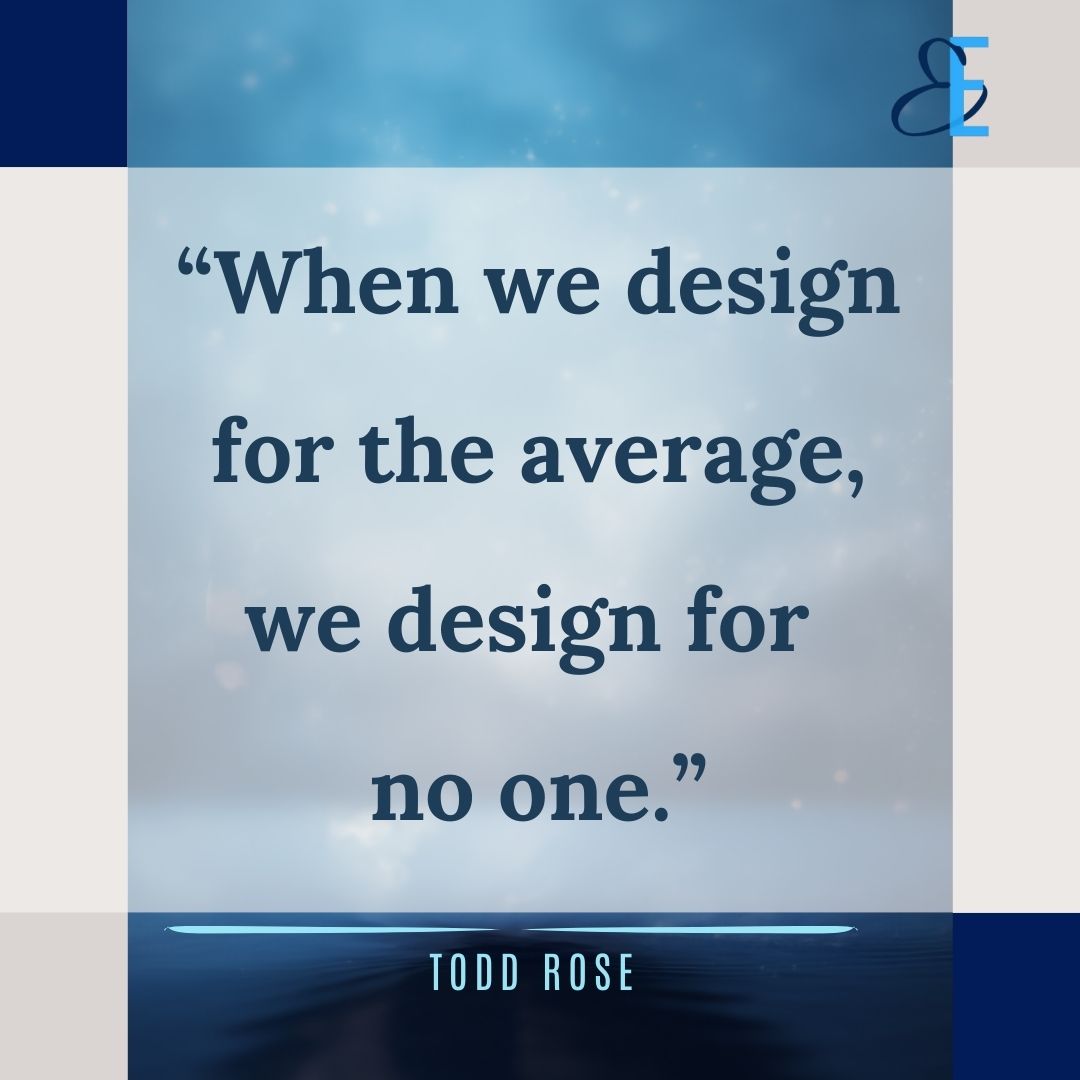
Now imagine a school where the most important data point isn’t a test score. It’s each student’s unique genius. The first step toward making that vision real is surprisingly simple: know your students’ strengths. What makes them light up? When do they feel most confident? What do they do so naturally, they don’t even realize it’s special? When we see those strengths clearly, we stop teaching to the middle and start teaching to what’s possible.
In this kind of school, there are no fixed labels. No “gifted.” No “struggling.” No neat little boxes that define a student by what they lack. Every learner is seen as a dynamic mix of brilliance and challenge, strengths that shine and skills still in progress.
And when strengths are the foundation, everything changes. Students stop bracing themselves for failure and start showing up with energy, curiosity, and belief. Their strengths become bridges—tools they can use to cross into unfamiliar territory instead of staying stuck in it.
That doesn’t mean we lower the bar. This isn’t about handing out gold stars for showing up or giving trophies just for trying. It’s not about softening expectations or dodging hard conversations. In fact, it’s the opposite. When students know their strengths, they’re more willing to do the hard things. They’re more open to feedback, more motivated to grow, and more likely to stay in the game when it gets tough.
Strengths create a path to accountability that’s rooted in purpose, not pressure.
That shift starts with us. Educators in strengths-based classrooms don’t begin by asking, “Where is this student falling behind?” They begin with, “What is this student amazing at, and how can we use that to lift everything else?”
This kind of school reimagines everything. Learning becomes personal. Curriculum bends toward curiosity. Confidence grows alongside content knowledge. Teachers become spotters of talent and builders of belief. Classrooms transform into creative labs, not compliance factories.
And no, this isn’t a far-off fantasy. It’s already happening—in classrooms where educators dare to see differently. The shift has already begun. The only question is: will we be the ones to lead it, or wait for permission?


The Research: Why Strengths-Based Teaching Works


For decades, education has been built around one question: What can’t this student do?But the research tells a different story. When we lead with strengths, students don’t just feel better, they learn better.
According to Gallup, students who strongly agree that their school is committed to building their strengths and that they have at least one teacher who makes them excited about the future are thirty times more likely to be engaged at school than those who don’t.
Yes, you read that right. Thirty. Times.
This isn’t a small lift in engagement, it’s a seismic shift. And it doesn’t start with a new program. It starts with a belief: every student has something worth building on.
Neuroscience backs it up, too. When students use their strengths, their brains actually fire differently. They activate positive learning pathways that boost retention, deepen problem-solving, and increase perseverance (Willis, 2007).
Strengths don’t just build confidence, they reshape cognition. So yes, the data is clear: when we start with strengths, everything improves. Engagement, motivation, academic growth, even the feel of the entire school. But let’s be honest. Knowing a student’s strengths isn’t enough.
The real magic happens when we use them on purpose.
Once we identify what students do best, we can connect those abilities to areas where they struggle. That’s how we help them build not just competence, but belief. That’s how growth sticks. So here’s the challenge. What if we stopped obsessing over what’s missing and started amplifying what’s already there?
Mission Possible: The Strengths Path


You don’t need to flip your entire teaching approach overnight. This is not about doing more. It is about teaching smarter, not harder by using what students already bring to the table.
The key is simple: Identify strengths. Then leverage them.
But before we dive into students, let’s talk about you. If I asked you to list three things you struggle with as a teacher, you could probably rattle them off without hesitation. But if I asked you to name three of your absolute teaching strengths, would you pause?
If so, you’re not alone. Most people can list their weaknesses faster than their strengths. Somewhere along the way, talking about what we do well started feeling like bragging. But what if recognizing our strengths wasn’t about ego? What if it was about impact?
Because here’s the truth: your strengths as a teacher shape your classroom. The way you build relationships, the way you deliver content, the way you create an environment where students feel safe and inspired—those strengths matter. And the more you lean into them, the stronger your teaching becomes.
Now imagine if we gave students that same opportunity.

This Isn’t a Strategy. It’s a Shift.
We don’t need more suggestions. We need a new lens. Strengths-based teaching isn’t a “nice to have” philosophy. It’s a call to change the way we see kids and the way they see themselves. So instead of a checklist, here’s what it really means to lead a classroom where students don’t just meet expectations... they transcend them.
1. Know Their Strengths and Teach Them to Know Theirs
It starts with awareness. Not just yours. Theirs. Can your students name their strengths without flinching or deflecting? Can they tell you how their brain works best? What kind of learner they are? What lights them up? What shuts them down? If not, they don’t need more motivation. They need a mirror. Build reflection into your classroom. Give language to things students do well. Let them track when they felt most successful, energized, or proud. This is more than self-esteem.
This is cognitive ownership. Because students who can name their strengths can also name their power.
2. Use Strengths as Launchpads, Not Labels
Once a strength is identified, don’t treat it like a label. Treat it like a lever.
Strengths aren’t meant to decorate a student profile. They’re meant to do work. They should open doors, deepen learning, and challenge students to stretch further than they thought they could.
A student with a gift for drawing shouldn't just be decorating the margins. They should be visually mapping scientific concepts, illustrating mathematical thinking, and designing stories that bring language to life. Their art is not extra—it’s how they think.
A student wired for empathy shouldn’t be told to sit down and stop talking. They should be leading restorative circles, mentoring younger students, and facilitating the kind of connection that builds real classroom culture. Their heart is their superpower.
A student who thrives on rhythm isn’t just tapping on a desk. That internal beat can help them master reading fluency, memorize facts, understand math patterns, and stay focused through movement. Rhythm isn’t a distraction—it’s a learning strategy waiting to be used.
When a strength becomes a tool, not a trophy, it becomes transformational.


3. Shift the Spotlight: From External Praise to Internal Ownership
Most classrooms are full of praise. “Great job.” “You’re so smart.” “I love how you…” That’s fine—but it’s not enough. Students don’t just need to be noticed.
They need to notice themselves.
Start asking better questions:
What did you do well today that surprised you?
What strategy did you use that helped you succeed?
What made you feel strong in that moment?
When students learn to see, name, and trust their own process, they stop performing for approval and start rising on their own terms.
4. Give Control with Purpose, Not Just Choice
This isn’t about letting students pick between coloring or writing a poem. It’s about helping them understand why they choose what they choose.
When you give students control, frame it with reflection:
How do you learn best?
Which format will help you show what you know most clearly?
How can your strength help you go deeper into this content?
Empowered learners don’t just want choice. They want agency—and they want to know why it matters.
5. Make Strengths the Culture, Not the Add-On
This isn’t a Wednesday activity. This is the way we talk. The way we plan. The way we connect. Build strength-spotting into your feedback. Into your planning meetings. Into your hallway conversations. Into student-led conferences and staff PD.
Stop asking “How do we fix this kid?” Start asking “What do they already bring that we can build on?”
This shift doesn’t cost time.
It saves energy, rebuilds trust, and changes lives.
Evolving: Revolutionary Teachers Leading the Way

Teachers who embrace strengths-based education aren’t just adapting to change. You are the change. You’re not waiting for the system to catch up. You’re leading from where you are—with what you have—because you know classrooms should be spaces of empowerment, not compliance. Creativity, not conformity. Growth, not just grades.
Maybe your school isn’t there yet. That’s okay. Because the most powerful shifts in education have never come from policy or programs. They’ve come from teachers who dared to think differently. Teachers who saw brilliance where others saw “behavior.” Who chose curiosity over control. Who believed in potential, even when the system forgot how.
Revolutionary teachers don’t just react to the future. You build it.
By centering strengths, you’re not just helping kids pass tests. You’re helping them become the kind of people the world desperately needs. Innovators. Collaborators. Problem-solvers. Dreamers who can back it up with action. And it doesn’t start with a district-wide rollout.
It starts with you.
Right here. Right now.

Gratitude and Acknowledgment


To every teacher who chooses to see the spark in every child, even when the system doesn’t, thank you. Your belief in your students, especially the ones who don’t yet believe in themselves, is what fuels this revolution.
You are not just teaching. You are changing lives. You are lighting the way.
A special thank you to Sir Ken Robinson, whose work on creativity and The Element has inspired millions to rethink education. Your message that every child has a unique talent waiting to be uncovered continues to shape the way we see learning, potential, and the future of schools.
To Don Clifton, whose groundbreaking question, "What would happen if we studied what was right with people instead of what’s wrong with them?" challenged us to rethink how we develop potential. Your work laid the foundation for a strengths-based approach that helps students and educators thrive.
And to Gay Hendricks, whose insights in The Genius Zone have shaped my thinking and this post. Your work reminds us that genius isn’t something we earn. It is something we uncover.
Together, we are redefining what education can be. One strength, one student, one revolutionary teacher at a time.
Much love,
Gema
Author

Education Lover &
Unapologetic Disruptor
XO
Inspiration

Book: The Element
Author: Sir Ken Robinson
Publisher: Harper Collins
Gifted Authors: Strong Sources
Clifton, D. O., & Rath, T. (2007). StrengthsFinder 2.0. Gallup Press.
Cooperrider, D. L., & Whitney, D. (2005). Appreciative Inquiry: A Positive Revolution in Change. Berrett-Koehler Publishers.
Gallup. (n.d.). Gallup Student Poll: Measuring Hope for the Future, Engagement With School, and Wellbeing. Retrieved from https://www.gallup.com
Hendricks, G. (2021). The Genius Zone: The Breakthrough Process to End Negative Thinking and Live in True Creativity. St. Martin’s Essentials.
Lopez, S. J., & Louis, M. C. (2009). The Principles of Strengths-Based Education.Journal of College and Character, 10(4). https://doi.org/10.2202/1940-1639.1041
Louis, M. C. (2008). Strengths-Based Student Development: A Positive Approach to Academic Success.About Campus, 13(3), 8-15. https://doi.org/10.1002/abc.252
Robinson, K. (2009). The Element: How Finding Your Passion Changes Everything. Penguin.
TNTP. (2012). The Irreplaceables: Understanding the Real Retention Crisis in America’s Urban Schools. Retrieved from https://tntp.org
Waters, L., & Loton, D. (2019). Strengths-Based Parenting and Academic Achievement in Adolescents: The Mediating Role of Perseverance.Journal of Happiness Studies, 20(4), 1121-1140. https://doi.org/10.1007/s10902-018-9994-2
Willis, J. (2007). Brain-Based Teaching Strategies for Improving Students’ Memory, Learning, and Test-Taking Success.Childhood Education, 83(5), 310–315. https://doi.org/10.1080/00094056.2007.10522947

