

Revolutionaries:
Teachers, Leaders and Game-Changers

Finding My Tribe: The Quest for Passionate Educators

"You're smart. Do anything else."
I winced. My heart was set on becoming a teacher. In doing so, I defied my father, a rare occurrence. But it was the most aligned decision I ever made. From the start, I knew it was a world where I belonged.
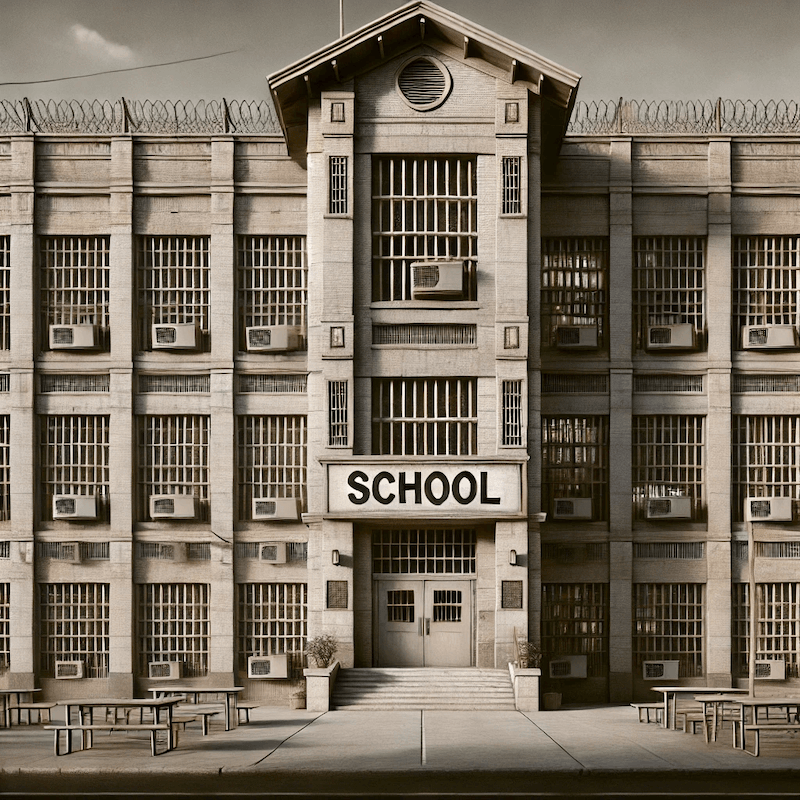
I stepped over a used condom walking into my first school. The bars on the windows and doors were nothing compared to the swelling in my heart when I saw my name on the classroom door. It was a goal and a dream achieved, and I was moved to tears.
The struggles have been real over the years. Disillusionment with a broken system hit hard. By year seven, I seriously considered quitting, telling myself the same thing my father had. You're smart. Do anything else. I couldn't do it. Something about the connection to this craft felt like a soul thing. Like I was born for this. I was home.
I knew I was different on my honeymoon. Sitting on a canopy bed looking out onto the ocean, surrounded by white sand, I took out three new teaching books, post-it notes, highlighters, and pens. In that moment, I couldn't imagine anything more glorious. The ocean waves, coconuts being cut open for me to drink, and digging into new strategies to teach language arts. Heaven.
My new spouse turned to me and said incredulously, "Why are you working?" I looked around. No one else had post-it notes out. Self-conscious, I walked up to a kiosk and picked up the most popular book on the beach. It put me to sleep. When I woke, I put it in the donate pile and returned to the deliciousness of my professional development books.
I have spent my entire career searching for my fellow outliers. My tribe. The educators who shaped and inspired me over the years, mentors, friends, colleagues of a certain caliber. They might not all be post-it-notes-on-the-beach quirky like me, but they have their own flavor. Collaborating with these people is like breathing in ocean air. There is nothing like it.
You know the ones. The barista who knows your name, exudes the best energy, and crafts your coffee with all the little touches. You notice when she is not there and your day feels slightly off. The mechanic you would wait hours for because his expertise and care are unmatched. The people you hear about. The ones you remember. The ones who are so fully in their thing that being around them feels like something.
That is who we are talking about.


What Makes a Revolutionary Educator
They are fierce. Not in the loud, confrontational way. In the way that chooses courage over comfort when something affects the good of the people around them. They say what others are dancing around, and they have the emotional intelligence to say it well. The status quo is simply not enough for them. They are problem finders and solvers. On a mission, always.
They are invested. Not the close-your-door-and-do-your-own-thing type. They build real relationships with their students and their colleagues and they understand that those relationships are the whole foundation. They see possibilities where others only see problems. Their commitment creates a ripple that extends far beyond their own classroom, even when they cannot see it.
They are self-aware. A rare breed. They record their own lessons and watch them back. They welcome feedback. A lesson that flops in first period looks entirely different by sixth because they learned fast and adjusted. They know they have blind spots and are determined to find them. They model vulnerability and growth in ways their students carry long after they leave the room.
If you are still reading, you are probably one. Revolutionary teachers do not always see their own greatness. That is part of what makes them revolutionary.
The Hard Part
Ignaz Semmelweis discovered in the 19th century that handwashing drastically reduced deaths among new mothers. His evidence was clear. His peers ridiculed him anyway. He died thinking he had failed. Today he is celebrated as the father of infection control.
Revolutionary educators know this feeling. The resistance. The isolation. The days when you think about closing your door, minding your business, and just waiting it out. I have had those days. I imagine Semmelweis did too.
The difference is that revolutionary educators cannot stay quiet for long. It is not stubbornness. It is wiring. This is who they are. They know deep down there is a better way and they simply cannot operate as if there is not.
Some burn brightly in calm conditions. Others find themselves in stormy ones, working tirelessly to do the job while also protecting their flame. Whether you are making great strides in a supportive environment or incremental ones in a rough one, your effort is real and it matters. Even when no one is measuring it.
A Word About That
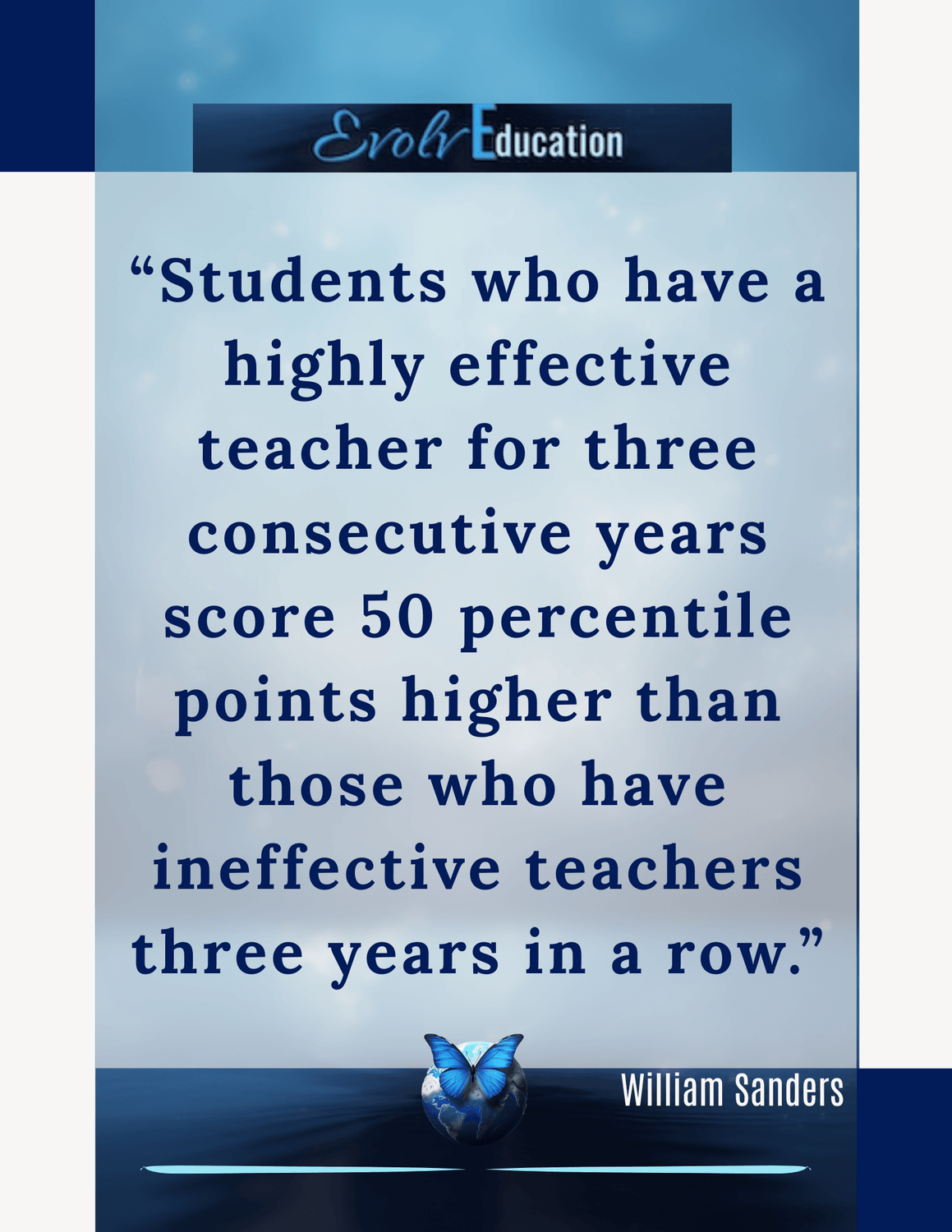
Research shows it takes an average of eleven hires to replace one high-impact teacher. Eleven. The kind of teacher who moves mountains with words, actions, and heart. That is not just a statistic. That is a lifetime of influence that most will never fully comprehend.
You are irreplaceable. Not because the system says so, it often does not. But because the students in front of you know it, even if they never say it out loud.


To Every Revolutionary Educator
Thank you for being here. For staying in it despite the hard. For caring deeply in a world that sometimes makes you choose between your personal life and your professional one. For showing up with your whole self when half would have been easier.
You are my tribe. And the world is genuinely better for having you in it.
Protect your flame.
Much love,
Gema
If the work of knowing your strengths, understanding your wiring, and leading from who you actually are sounds like exactly what you need right now, that is the work I do. I would love to bring it into your school.
Author

Education Lover &
Unapologetic Disruptor
XO
The Courage To Teach
by
Parker J. Palmer
Ames, D. R., & Flynn, F. J. (2007). What breaks a leader: The curvilinear relation between assertiveness and leadership. Journal of Personality and Social Psychology, 92(2), 307-324.
Darling-Hammond, L., & Richardson, N. (2009). Teacher learning: What matters? Educational Leadership, 66(5), 46-53.
Desimone, L. M., Porter, A. C., Garet, M. S., Yoon, K. S., & Birman, B. F. (2002). Effects of professional development on teachers’ instruction: Results from a three-year longitudinal study. Educational Evaluation and Policy Analysis, 24(2), 81-112.
Goddard, R. D., Hoy, W. K., & Woolfolk Hoy, A. (2000). Collective teacher efficacy: Its meaning, measure, and impact on student achievement. American Educational Research Journal, 37(2), 479-507.
Hattie, J. (2003). Teachers make a difference: What is the research evidence? Australian Council for Educational Research Annual Conference on Building Teacher Quality.
Harvard Graduate School of Education. (2020). Self-care for educators. Retrieved from https://www.gse.harvard.edu/news/uk/20/03/self-care-educators
Jennings, P. A., & Greenberg, M. T. (2009). The prosocial classroom: Teacher social and emotional competence in relation to student and classroom outcomes. Review of Educational Research, 79(1), 491-525.
Schön, D. A. (1983). The reflective practitioner: How professionals think in action. Basic Books.
Seibert, S. E., Kraimer, M. L., & Crant, J. M. (2001). What do proactive people do? A longitudinal model linking proactive personality and career success. Personnel Psychology, 54(4), 845-874.
Zimmerman, B. J. (2002). Becoming a self-regulated learner: An overview. Theory into Practice, 41(2), 64-70.

